SaaS growth consultants are everywhere right now. In fact, I’ve probably had about a dozen LinkedIn connection requests from them so far this month.
The range in quality is honestly pretty staggering.
I've been thinking about this a lot lately, because I keep having the same conversation with founders who've come out the other side of a consulting engagement feeling like something was just a little off.
Sure, the work looked thorough and the recommendations sounded fairly reasonable, yet nothing really moved the needle.
Most of the time, the consultant was working with the wrong inputs and nobody had flagged that before the engagement started. Big mistake.
So, to help you get the most out of these engagements with SaaS growth consultants, I want to tell you about the goldmine most SaaS teams are sitting on.
But first, I think we need to talk about why founders are reaching out for help right now.
Why Founders Are Reaching Out For Help Right Now
From what I’m seeing, it’s because the old assumptions have stopped holding up…
- Paid acquisition is more expensive than it used to be.
- Buyer expectations have shifted pretty dramatically.
- "We'll fix retention once we've hit the next growth milestone" is costly.
I've noticed that the founders who are now seeking outside support are recalibrating, which puts them in a good position to use that support well.
The trouble is that the pool of people calling themselves SaaS growth consultants has expanded pretty rapidly and the label doesn't tell you much on its own.
I mean, it’s a very vague job title.
Some Consultants Cost You More Than They Save...
Let me start here, because I’m not one to sugarcoat things.
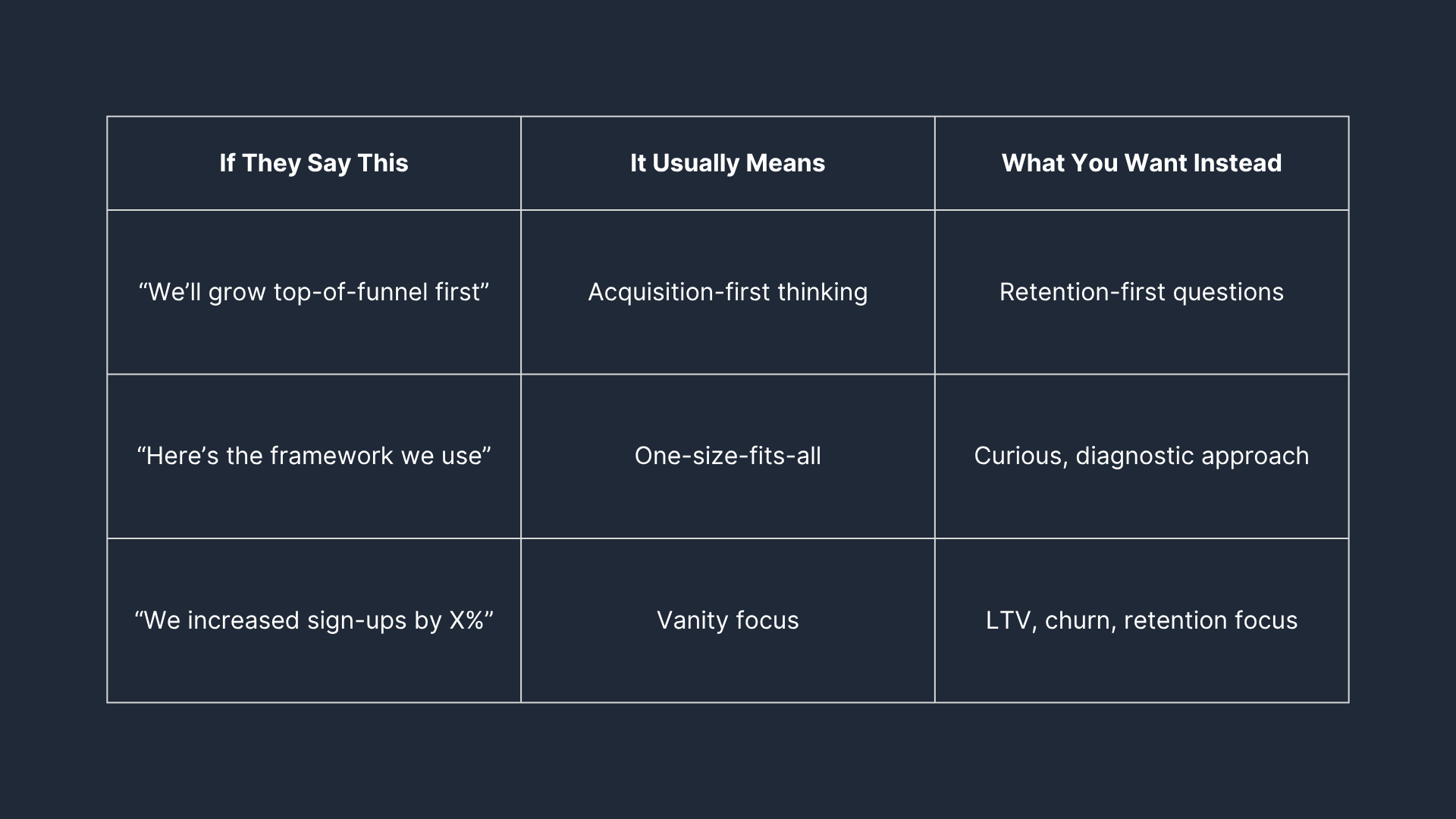
The first type to watch out for is the framework-first consultant.
They show up with a pre-built model, walk you through it with confidence, and deliver something that looks comprehensive.
The issue is that their model was built around a median case and I don’t think your business is the median case.
When I speak with founders who've had disappointing experiences, this is usually what happened, a smart person applied a smart framework to the wrong situation.
The second type is the one-win wonder. Do you know who I’m talking about?
They helped a company grow 3x and now that story anchors literally everything.
Sure, it probably happened, but that outcome doesn't tell you whether they really understand why it worked, or whether they can think clearly outside of that specific context.
You'll often find them reaching for the same playbook regardless of fit.
I’m not a fan of this.
The third type is the vanity metric chaser and this one is probably the most expensive.
Traffic goes up and so do sign-ups, but then you check retention three months later and you’ve tanked.
SaaS growth consultants who aren't thinking about downstream impact on lifetime value are optimizing for the wrong finish line.
Here's What You Really Want Them To Ask You
I've always found that the best consultants reveal themselves pretty quickly in the first conversation, based on what they want to know before they say anything.
I can read these people like a book.
If they're asking about your churn before they touch your acquisition numbers, that's a good sign.
If they want to understand why customers leave before they recommend how to bring more in, you're probably talking to someone with genuine SaaS experience rather than someone who's adapted a general growth playbook.
Ask them…
- Whether they've ever recommended against a price increase.
- To trace a specific outcome from a past engagement.
- What they'd need to see before making any recommendations at all.
I don’t want to hear any vague answers to those questions.
Names worth researching in this space include Lenny Rachitsky, who brings real depth to product-led growth thinking, and Kyle Poyar, whose work on packaging and pricing is consistently detailed and practical.
These people have gone genuinely deep rather than broad, and that's what you're looking for as far as I’m concerned!
SaaS Teams Don’t Even Realize That They’re Sitting On A Goldmine
I think it's worth remembering that the richest source of growth data most SaaS businesses have is sitting in their cancellation flow, or more often, in the complete absence of one.
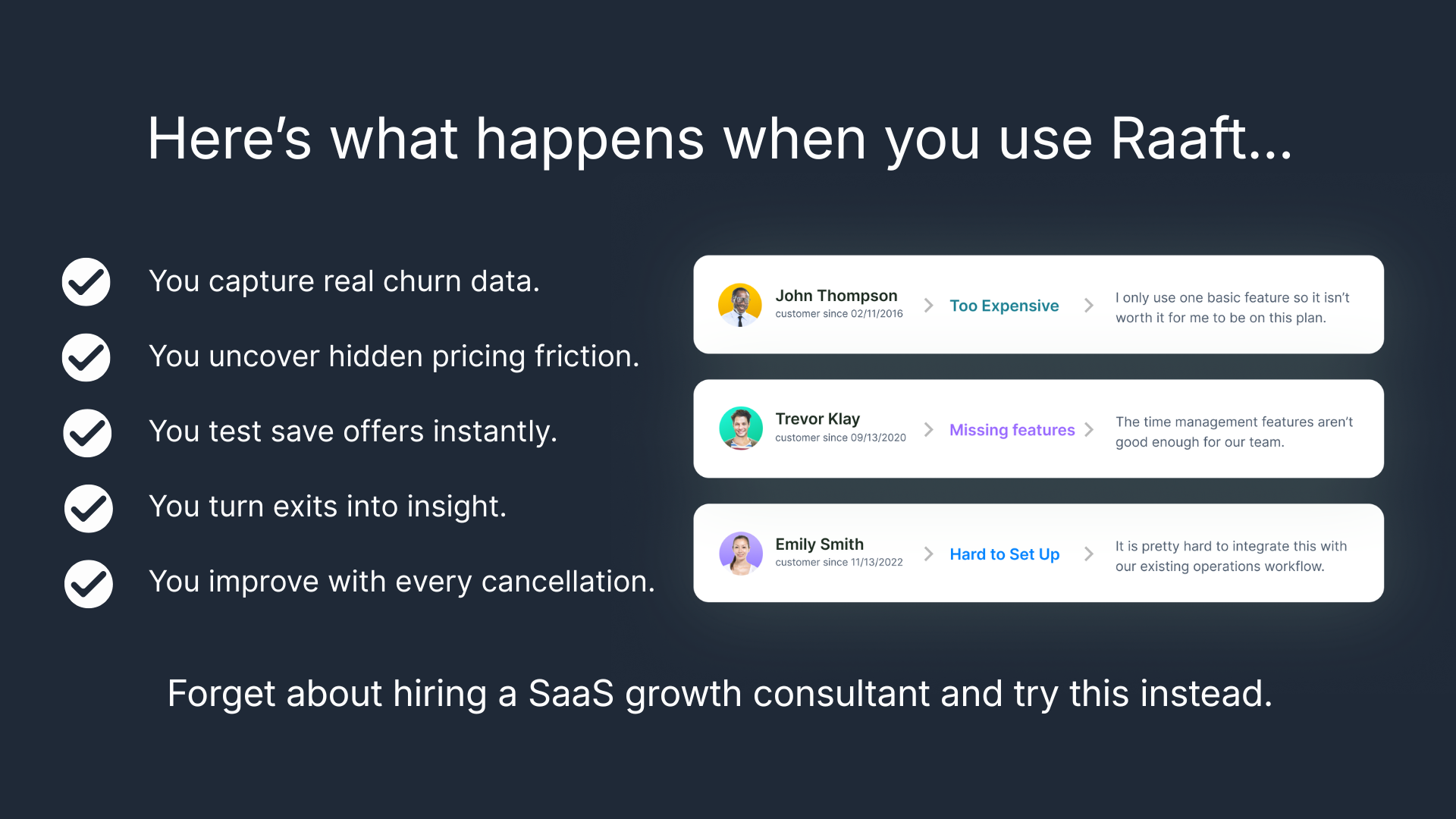
When customers leave, they'll often tell you exactly what went wrong if you give them a structured way to do it.
"Too expensive" as a reason is easy to dismiss, but when you start seeing it alongside "switched to a competitor" and "not enough value for the price," patterns start to emerge that should be feeding directly into your growth thinking.
I’m always shocked to see teams skip this entirely. Don’t be like them!
They invest in analytics dashboards, attribution tools, SaaS growth consultants... and they're not capturing the clearest signal they have, which is what departing customers are willing to say on the way out the door.
This is where I’m going to shamelessly plug Raaft. It’s fine, you’re going to love it.
When a customer tries to cancel, Raaft presents them with a targeted offer based on their plan and cancellation reason, while recording structured feedback that goes straight into your product and pricing decisions.
A customer who accepts a discount and stays tells you something important.
On the flip side of that, a customer who declines and leaves tells you something different but equally valuable.
Most teams don't realize this data was within reach the whole time. That's exactly the kind of thing that changes how you approach every growth conversation going forward.
I'm generally direct with founders about this: the SaaS growth consultants worth hiring will want to see your retention and cancellation data before they recommend anything.
If you don't have that data in a structured, accessible form, you're asking them to work blind, and that limits what even the best consultant can do for you.
Give SaaS Growth Consultants More Data To Work With
What’s really driving growth and what’s getting in the way of it?
I want you to get your hands on cancellation data.
If I’m honest, once you sink your teeth into this data, you may decide that you don’t even need to work with a SaaS growth consultant.
But let’s say you do… you're handing them evidence instead of assumptions.
This will change the quality of everything that follows.
Raaft takes about 30 minutes to set up and you can get started for free without needing any development time.
The data starts collecting immediately and it'll be some of the most useful material any growth consultant you work with will have seen going into an engagement!
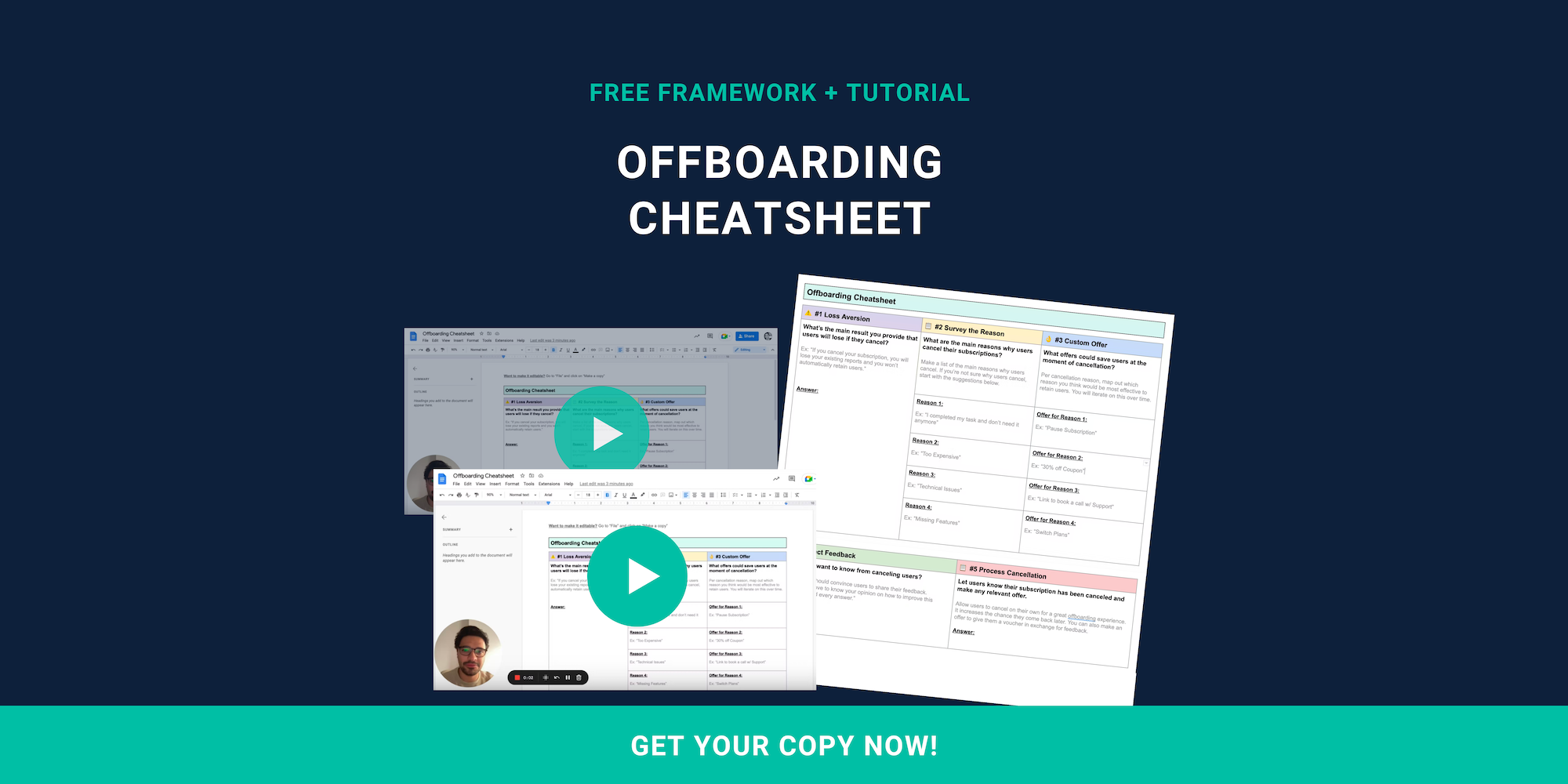
Offboarding Cheatsheet
This framework + video tutorial will help you design a better cancellation process.
Some of our featured articles

Miguel Marques
Miguel Marques
![Best Product Survey Templates: Here Are My 3 Favorites [2025 Research]](https://raaft-website.s3.amazonaws.com/img/blog/thumbnails/Best-Product-Survey-Templates.png)
Miguel Marques
Customer Success insights in your inbox
Helping Founders and Customer Success Managers handle customer retention effectively.
We will only ever send you relevant content. Unsubscribe anytime.