Table of Contents
When I see founders selling SaaS businesses, they’re usually leaving quite a bit of money on the table. It’s often down to what they did in the two years before the deal.
The story starts well before anyone opened a term sheet…
Prospective acquirers want to see two things:
- Clean retention data
- Documented cancellation flows
I find it shocking that many SaaS companies have neither.
Selling A SaaS Business Requires A Good Exit Strategy…
Let me start here, because I'm not one to sugarcoat things.
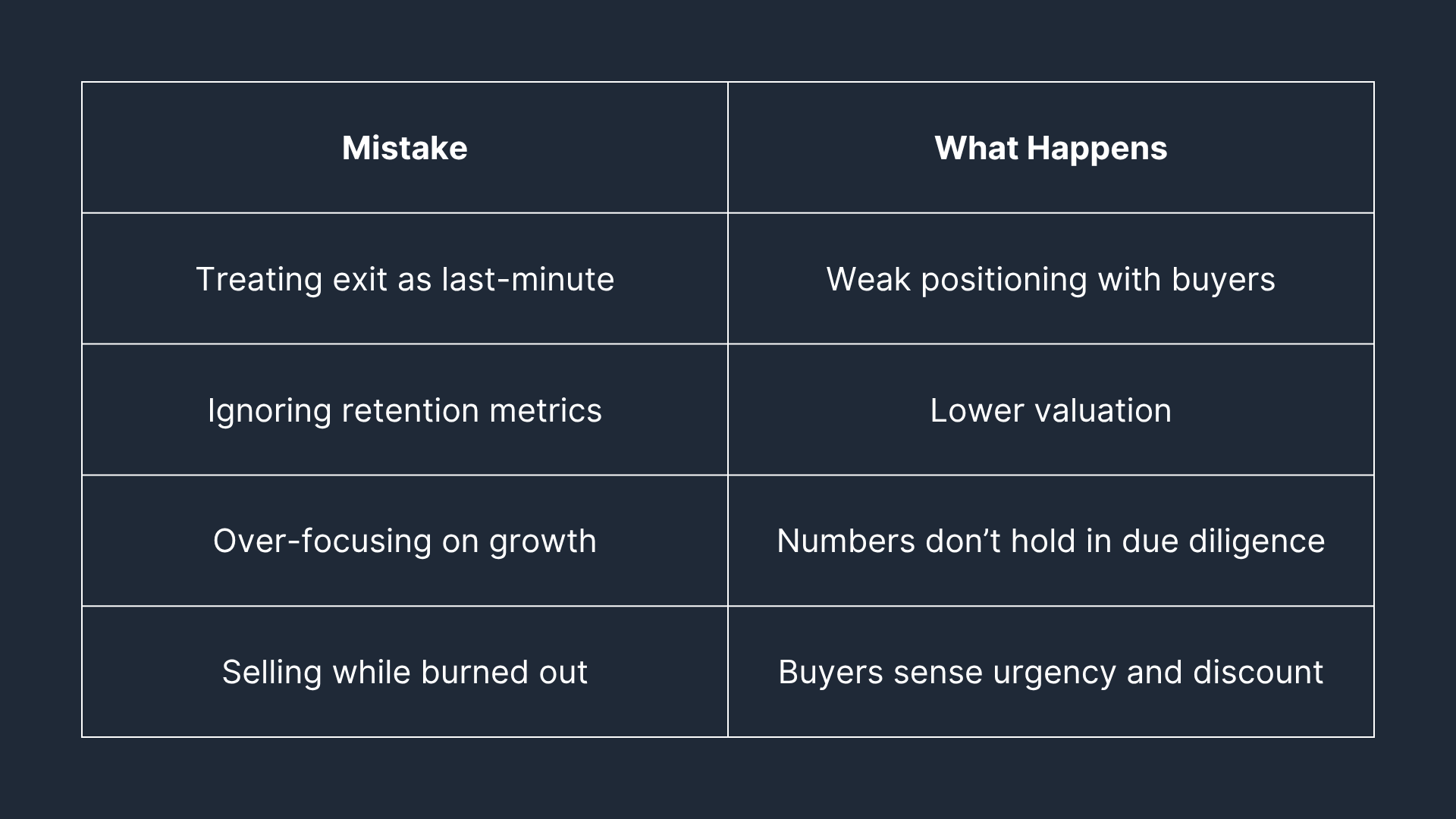
When selling a SaaS business, the first mistake I see is treating the exit as a separate phase of the business.
Founders who wait until they're ready to sell before thinking about what a buyer really wants are already behind.
Buyers are looking at your…
- Retention data
- Churn trends
- Customer feedback loops.
They’re factoring all of this stuff in.
If that story isn't clean and well-documented, you’re going to find the valuation conversation a little uncomfortable.
The second mistake is over-indexing on revenue growth and underinvesting in the metrics that hold up under due diligence.
What I see is founders (who’ve grown aggressively on acquisition but never stabilized retention) walk into buyer conversations with unrealistic numbers in their heads.
The math isn’t math-ing. These numbers don’t survive the first data room review.
Sure, revenue going up looks great on a slide.
The problem is, if net revenue retention is below 90%, that’s a different conversation altogether.
I should also mention rushed timing.
Selling a SaaS business when you're burned out isn’t a good starting condition.
The same can also be said for trying to sell when churn hasn’t ticked up for three consecutive months.
You really want to be selling from a position of confidence.
I think buyers can sense urgency and you can bet they'll price it accordingly.
Why Buyers Care About What You're Probably Not Tracking
Here's the thing most exit strategy guides won't tell you…
When serious acquirers evaluate a SaaS business, they're building a picture of whether…
- The revenue is real.
- Customers are genuinely happy.
- The retention story holds up without the founder in the room.
Loads of founders just assume that buyers are only looking at the top-line. Not true.
I've always found that the cleanest acquisitions, the ones where founders come out feeling like they got a fair outcome, almost always involve companies with really well-documented cancellation data.
Think about what that data tells a buyer…
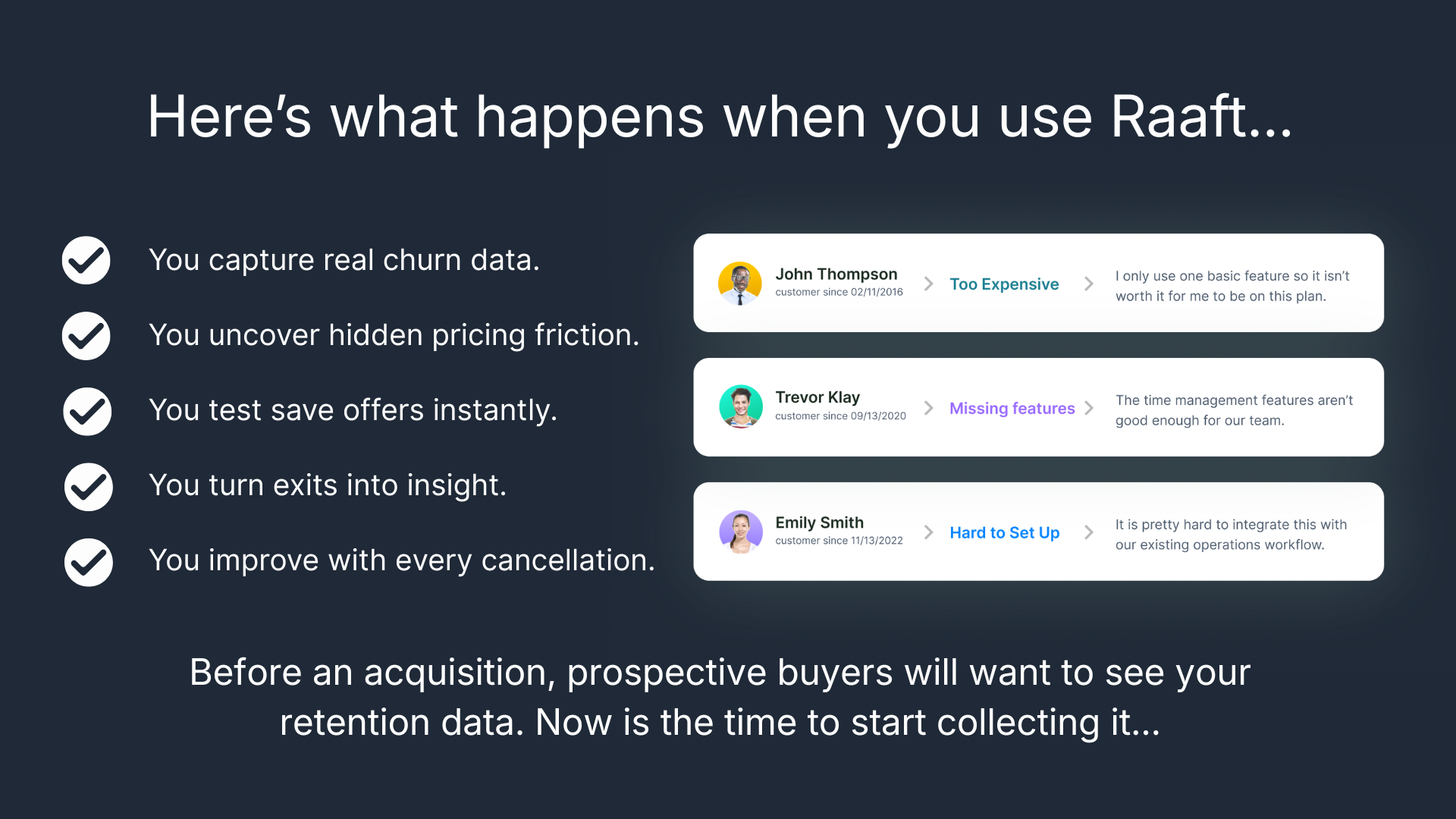
- Why customers leave
- Which “save offers” worked
- Where pricing friction sits
They’ll also see if churn is concentrated in a specific cohort or plan type.
Whoever is taking over the business is getting a roadmap for retention… if you have this data.
That’s obviously going to move the valuation conversation in a more positive direction.
What A Good Exit Strategy Really Looks Like In My Eyes
I'm going to walk you through the approaches that consistently produce the best outcomes for founders selling a SaaS business, based on what I'm seeing in the market right now.
Strategic Acquisition
A strategic acquirer is typically a larger company buying you because your product, customers, or team fills a specific gap in their portfolio.
These deals can command significant premiums, sometimes 8 to 12x ARR for the right fit, but they require a clean story.
Strategic buyers have technical teams that will go through your…
- Codebase
- Retention numbers
- Support ticket history
They're not going to miss a churn problem you've been papering over.
If this is the path you're aiming for, you need to start working backwards from what that acquirer is going to want to see, and building toward it with at least 18 months of runway before any outreach.
Private Equity & Growth Buyouts
PE buyers are looking for predictable, scalable revenue with a management team that can operate without the founder. That bit is key… without the founder!
They'll want to see strong NRR and documented processes.
And, of course, some evidence that the business doesn't depend entirely on a handful of key people.
I've been thinking about this a lot lately, because the PE market for SaaS businesses has matured considerably.
These buyers are more sophisticated than they were five years ago and their due diligence is correspondingly more rigorous.
Vague answers about churn don't fly the way they once might have!
Acqui-Hire
When a larger company is primarily interested in your team rather than your product or revenue, the dynamics of selling a SaaS business change quite a bit.
The valuation is often lower on a revenue multiple basis, but the deal can close quickly and with strong personal outcomes for key team members.
I'm generally direct with founders about this option…
If the product hasn't found real traction but the team is excellent, this route can actually be the most straightforward path to a clean outcome.
Selling To A Holding Company Or Micro-PE
There's a growing market of holding companies and micro-PE operators buying SaaS businesses in the $500k to $5M ARR range.
These buyers are often more flexible on structure, more comfortable with founder exits, and less demanding on team retention.
The multiples are typically lower than a strategic deal, but the process is faster and the certainty of close tends to be higher.
For founders who are tired and want a clean outcome more than a stretched valuation, it's good to understand this part of the market.
What Buyers Are Going To Ask You
I can read these conversations fairly well at this point. The first serious buyer conversation almost always goes to the same place.
They'll ask about churn, then why customers leave… then what you've done about it.
If your answer is vague or if you don't have structured data to back it up, that’ll stall the conversation more often than not.
If you've got a clean cancellation flow capturing exit reasons, offer acceptance rates, and feedback broken down by plan and cohort... you've just made their job considerably easier.
All of this stuff will make your business considerably more attractive.
Before you enter the nitty-gritty of any process, I think you should ask yourself whether…
- Your retention data is structured and exportable.
- You can explain exactly why the last 50 cancellations happened.
- You've tested save offers and know which ones work.
- A buyer could understand your churn story without you in the room to explain it.
Most founders can't answer those questions cleanly.
The ones who can are in a much stronger position!
SaaS Teams Don't Realize They're Sitting On A Goldmine
The data buyers want to see is usually the stuff that’s least likely to have been collected well.
We know that cancellation data is the clearest signal your business generates.
When a customer leaves and tells you why, that information is gold.
Structured over time and broken down by cohort and plan type, it becomes one of the most compelling documents you can put in front of an acquirer.
This is where I'm going to shamelessly mention Raaft, because it's directly relevant here.
When a customer tries to cancel, Raaft captures their reason in a structured way, presents a targeted offer based on their plan and cancellation reason, and feeds everything back into a reporting dashboard you can actually hand to a buyer.
The setup takes about 30 minutes and there's no development work involved.
I've spoken with a lot of founders who come to us having already started an exit process, wishing they'd had this data from earlier in the company's life.
Start Building Toward Your Exit Before You Need To
Selling a SaaS company is mostly about the work you do before the process starts.
You need clean retention data and documented cancellation flows.
This obviously takes time to build, but getting the ball rolling can be done in an afternoon.
If you start using Raaft now, you'll have structured cancellation data feeding into your product and pricing decisions from today, and when the time comes to sit across from an acquirer, you'll be handing them evidence instead of assumptions.
That’s going to change the quality of everything that follows.
Get started for free today. No development time required and you'll be live in about 30 minutes.
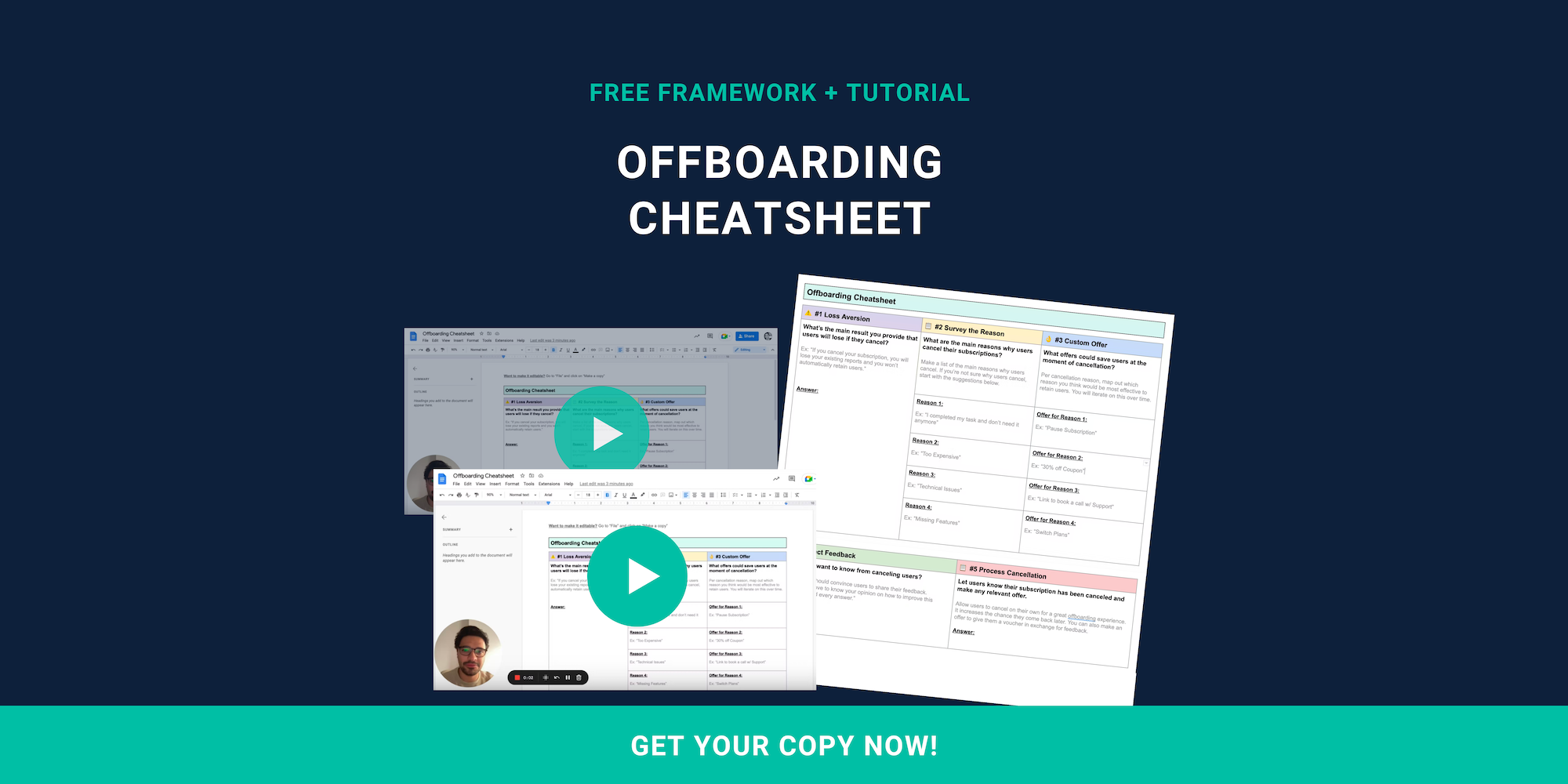
Offboarding Cheatsheet
This framework + video tutorial will help you design a better cancellation process.
Some of our featured articles

Miguel Marques

Miguel Marques
Miguel Marques
Customer Success insights in your inbox
Helping Founders and Customer Success Managers handle customer retention effectively.
We will only ever send you relevant content. Unsubscribe anytime.